How Fast Should Water Damage Restoration Begin?
Water Damage Restoration: Rapid Steps to Protect Your Home
Water Damage Restoration must start fast to limit destruction. Time matters because water travels through floors, walls, and insulation. A quick response reduces structural damage, saves personal items, and lowers the chance of mold. In this introduction we explain why immediate action matters and outline what you will learn in the article.
Why fast action matters
When a leak or flood hits, delays let moisture soak deeper. As a result, materials weaken and mold can form within 24 to 48 hours. Therefore, the fastest possible extraction and drying will limit costs and health risks. Our experience shows early detection and immediate mitigation prevent permanent damage.
What to expect in this guide
- Step by step emergency water extraction checklist for homeowners and technicians
- Essential equipment explained such as pumps, industrial vacuums, dehumidifiers, and air movers
- Timelines for extraction, drying, and inspection to avoid mold and structural decay
- Safety and contamination notes plus antimicrobial and disinfection options
- Quick tips for dealing with insurance, temporary repairs, and when to call professionals
Who should read this
Homeowners facing leaks, landlords, property managers, and restoration technicians will all find clear, actionable steps. This guide uses plain language and technical detail, so you can act fast and smart.
Related keywords and synonyms: mold removal, water extraction, drying, dehumidifiers, moisture meters, inspection and assessment, antimicrobial treatments, biohazard cleanup.
Key Insights: Water Damage Restoration Essentials
Water damage starts small but can become catastrophic quickly. Leaks, burst pipes, storm floods, and rising groundwater force water into floors, walls, and insulation. As a result, materials weaken and mold grows within 24 to 48 hours. Therefore, understanding causes and acting fast saves money and health.
Common causes of water damage
- Plumbing leaks from pipes, fittings, and appliances
- Roof leaks and storm damage that allow water into ceilings
- Basement flooding from heavy rain or poor drainage
- Sewage backups and appliance overflows that create contamination
Why moisture and mold are dangerous
Moisture promotes structural decay and hidden rot. Mold spores spread quickly and cause musty odors and health problems. For guidance on health risks and cleanup limits, refer to the EPA mold resources. Early mold prevention reduces remediation time and costs.
Why professional water cleanup and structural drying matter
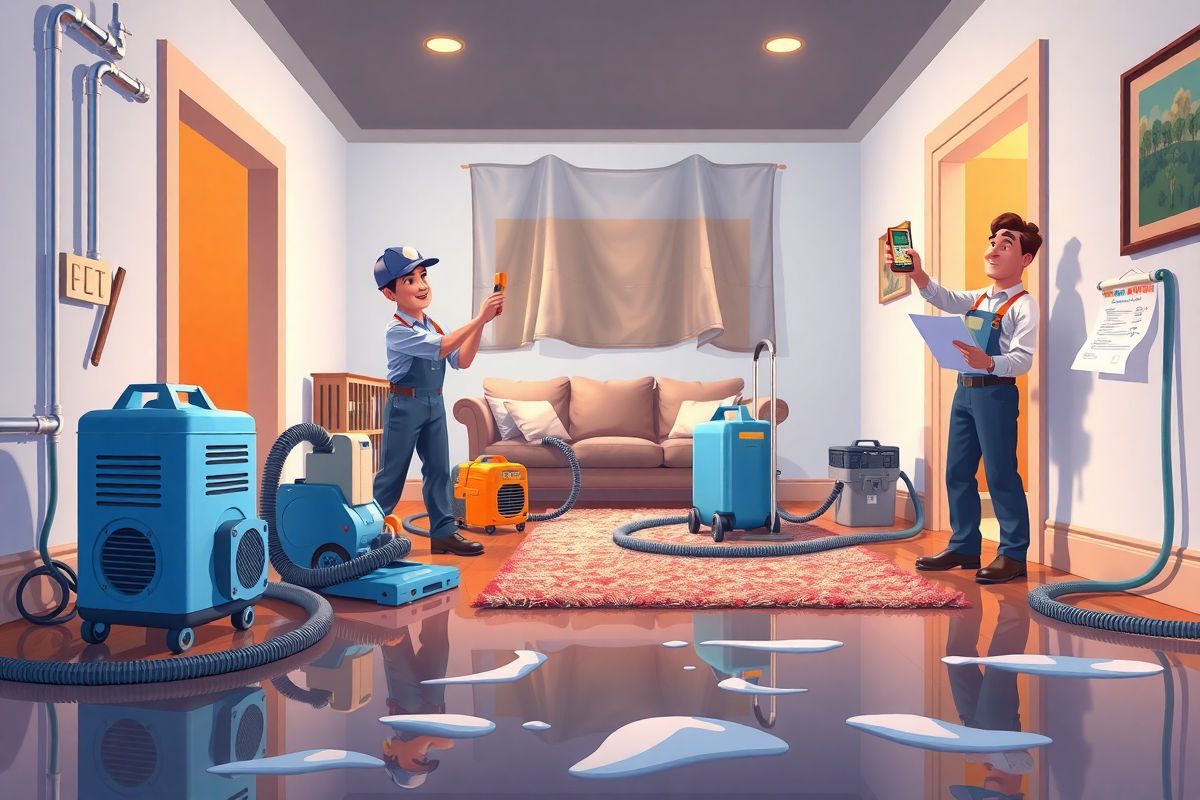
Professionals use industrial pumps, wet vacuums, dehumidifiers, and high-velocity air movers. They also use moisture meters to map saturation and track drying. Certified technicians follow drying standards from the IICRC, which help avoid hidden moisture pockets and ensure complete structural drying: IICRC.
- Rapid water extraction limits material saturation
- Controlled drying prevents warping, delamination, and mold
- Antimicrobial treatments lower contamination risks
Inspection, assessment, and when to call help
A proper inspection identifies water source, contamination level, and affected building materials. For examples of inspection priorities and protecting your investment, see this inbound article: property inspections investment. If the water originates from a roof, emergency roof repairs may be required; learn quick fixes here: emergency roof repair fast.
Practical prevention and next steps
- Shut off water and electricity if safe
- Remove soaked items and raise wet furniture on blocks
- Call 24/7 emergency response for extraction and drying
- Document damage for insurance and request a professional mold inspection after flooding: professional mold inspection after flooding.
By acting immediately and using professional water cleanup and structural drying, you prevent long-term damage and reduce mold remediation needs. Quick action matters, because every hour increases risk and repair costs.
Quick Comparison: Restoration Methods and Plumbing Solutions
Below is a clear table that compares common water damage restoration methods and plumbing solutions. Use it to choose the right mix of water cleanup, structural drying, and preventive plumbing work.
| Method or Plumbing Solution | Benefits | Typical timeline | Cost range (USD) | Effectiveness vs mold and moisture |
|---|---|---|---|---|
| Water extraction (pumps, wet vacs) | Removes standing water fast and limits material saturation | Hours to 1 day | 200 to 1,500 | High for standing water; reduces mold risk immediately |
| Structural drying (dehumidifiers, air movers) | Dries framing and cavities; controls humidity | 2 to 7 days | 300 to 2,000 | Very effective when monitored with moisture meters |
| Antimicrobial treatment and disinfection | Lowers biological contamination and odors | 1 day | 150 to 600 | Good for inhibiting mold growth on surfaces |
| Controlled demolition and tear-out | Removes unsalvageable materials to stop spread | 1 to 5 days | 500 to 5,000+ | Essential when materials are contaminated or soaked |
| Full mold remediation (containment, removal) | Removes active mold colonies and spores | Days to weeks | 1,000 to 10,000+ | Necessary for established infestations |
| Sump pump installation and basement drainage (plumbing solution) | Prevents future basement flooding | 1 day | 600 to 2,500 | Preventive; cuts moisture recurrence risk greatly |
| Leak detection, automatic shutoff, and smart sensors (plumbing solution) | Stops leaks early and notifies homeowners | Same day install to 2 days | 100 to 1,000 | Very effective for mold prevention by reducing dwell time |
| Backflow preventer and sewer upgrades (plumbing solution) | Blocks sewage backups and contamination | 1 to 3 days | 500 to 3,000 | High for preventing contaminated water events |
Key takeaways
- Start with rapid water extraction, because quick action reduces costs and mold risk.
- Follow with controlled structural drying to ensure complete moisture removal.
- Use antimicrobial treatments when contamination is present, and plan for repair or reconstruction when materials are compromised.
- Invest in plumbing solutions like sump pumps and automatic shutoff systems to support long term mold prevention and reduce repeat emergencies.
Practical Tips for Preventing and Managing Water Damage
Act fast and stay safe when you find a leak or flood. Immediate steps reduce damage and cut mold risk. Below are clear, practical actions homeowners can use now and long term.
Immediate steps after discovering water
- Shut off water at the main valve if safe, and cut power to affected areas to avoid electrocution.
- Photograph damage for insurance and inventory soaked items for claims and restoration records.
- Remove small items and raise furniture on blocks. This reduces contact time with moisture and prevents staining.
- Use towels and mops for light spills, but call a professional for standing water over one inch deep.
Short term containment and safety
- Ventilate the area to reduce humidity, but avoid using HVAC systems that can spread contaminants.
- Place moisture-absorbing materials like towels and fans in low risk spots; however, leave structural drying to technicians.
- Wear gloves and masks if you suspect contamination from sewage or chemical spills.
Preventive maintenance and plumbing solutions
- Schedule regular damage inspections of basements, crawl spaces, and attics. Early detection stops small leaks from becoming disasters.
- Fix running toilets and dripping faucets promptly to avoid long term moisture buildup.
- Install leak-detection sensors and an automatic shutoff for plumbing issues. Smart sensors greatly reduce dwell time after leaks.
- Maintain gutters, downspouts, and grading to keep roof and foundation water away from your home.
Moisture monitoring and professional help
- Use a hygrometer to track indoor humidity. Keep levels between 30 and 50 percent to discourage mold.
- Call certified technicians for structural drying, water extraction, or suspected mold. Professionals use moisture meters and industry protocols to ensure full drying.
- Document all repairs and receipts for insurance and future inspections. A clear paper trail speeds claims and approvals.
By combining quick action with regular maintenance and timely plumbing repairs, you limit damage, lower costs, and improve mold prevention.
Conclusion
Professional Water Damage Restoration protects your home, your health, and your investment. Water travels fast and hides inside walls and floors. Therefore, quick, certified mitigation and structural drying are essential to stop deterioration and mold. When professionals respond, they extract water, control humidity, and inspect for hidden moisture.
Call a qualified team because they follow industry drying standards and use calibrated moisture meters. As a result, you avoid repeat problems and costly repairs. Also, certified technicians can coordinate with insurers, document damage, and recommend repairs or reconstruction when needed.
Why act now
- Immediate response limits structural damage and mold growth.
- Professional water cleanup and antimicrobial treatments reduce contamination risks.
- Timely plumbing repairs and preventive upgrades save money over time.
We provide nationwide water damage mitigation and plumbing expertise. Certified specialists operate in every state, and our teams stand ready 24 hours a day, seven days a week. If you face a leak or flood, call for emergency extraction and a full inspection. Do not wait, because delays raise health and repair costs.
Recommended Service: discover this trusted partner.
Company profile: This project provides practical and educational content on water damage mitigation and plumbing services across the United States. Our goal is to help homeowners understand the risks associated with leaks, floods, moisture, mold, and common plumbing issues. We share clear, accessible information on water cleanup, structural drying, damage inspections, mold prevention, and reliable plumbing solutions. All of our content is designed to support home safety and maintenance, backed by the availability of certified technicians in every state, ready to assist 24/7 nationwide. Nothing in our articles replaces professional evaluations, repairs, or recommendations from qualified specialists.
Online profiles: Website: fixterra.info
Blog: fixterra.info/blog
Frequently Asked Questions (FAQs)
What is the first thing I should do when I find water damage?
Shut off water if safe and cut power to soaked areas. Photograph damage. Remove small items. Then call a water damage restoration professional for assessment and water cleanup.
How fast can mold form after a leak?
Mold can begin within 24 to 48 hours. Therefore act quickly to dry and disinfect. Early mold prevention limits remediation scope.
When do I need a professional mold inspection?
If you smell musty odors, see visible growth, or if contamination involves sewage. Also call pros after major floods or long term moisture. Certified inspectors perform damage inspections and testing.
Can plumbing repairs stop repeated water events?
Yes. Timely plumbing repairs and upgrades like automatic shutoffs, leak sensors, and sump pumps prevent repeat flooding. As a result you reduce long term costs and mold risk.
Do insurance companies cover restoration work?
Coverage varies by policy and cause. Document damage with photos and receipts. Then contact your insurer and a restoration team to coordinate claims. Quick action improves approval odds.