
IICRC Applied Structural Drying (ASD) Flood Facility approval—What?
IICRC Applied Structural Drying (ASD) Flood Facility approval: Inside a Real Flood House
The IICRC Applied Structural Drying (ASD) Flood Facility approval signals top-tier training and proven methods for real-world flood recovery. When water rushes into a home, fear and uncertainty follow. However, skilled technicians who train in IICRC-approved facilities bring calm, clear steps toward recovery. Because lives and belongings are at stake, homeowners need reliable, effective remediation now.
This approval means more than credentials. It means technicians learned in hands-on environments that mimic real damage. Therefore, ASD certification stands for superior expertise, consistent drying results, and safer restorations. As a result, you get faster, more trustworthy remediation when you choose teams trained under this standard.
Inside an ASD Flood House students face realistic scenarios. They see standing water, wet drywall, varied flooring, and actual air flow inside wall cavities. This experiential training improves judgment and speed. Moreover, it builds confidence for homeowners who want skilled crews and clear communication.
Read on to explore how an IICRC-approved Flood House shapes modern restoration. You will learn why this certification matters for faster recovery, better mold prevention, and long-term peace of mind.
What the IICRC Applied Structural Drying (ASD) Flood Facility approval means for restoration
An IICRC Applied Structural Drying (ASD) Flood Facility approval certifies real-world training and industry standards. In practice, this approval shows a facility meets strict inspection criteria. Therefore, technicians trained there learn measurement-driven drying, safe containment, and material-specific strategies. As a result, homeowners see faster drying, less demolition, and lower mold risk.
Why this certification sets companies apart
- It enforces consensus-based standards and documented procedures. For example, the IICRC explains that it develops standards for the inspection, cleaning and restoration industries, which helps ensure consistency and trust. (Source)
- It demands hands-on, realistic scenarios. Trainees practice with multiple flooring types, wet wall cavities, and extended water exposure. Because students learn under controlled but realistic conditions, crews make better field decisions.
- It requires measurement and verification. Technicians use moisture meters, data logging, and engineered drying plans. Therefore, drying outcomes are predictable and verifiable.
Real-world insights and credible quotes
Homeowners benefit because certified crews focus on both speed and safety. As the EPA notes, “Mold needs moisture to grow,” so rapid, measured drying prevents long-term problems. (Source) Moreover, LearnToRestore reports that its Flood House was inspected and approved by the IICRC as an IICRC-approved ASD Flood Facility, enabling hands-on ASD classes that mirror true mitigation work. (Source)
In short, the ASD Flood Facility approval is a badge of higher standards, proven methods, and measurable results. Thus, it helps homeowners find reliable, efficient water damage mitigation and lasting peace of mind.
Quick reference table: Water damage and restoration certifications
| Certification | Standards and scope | Process and requirements | Recognition and credibility | Key benefits for homeowners |
|---|---|---|---|---|
| IICRC Applied Structural Drying (ASD) Flood Facility approval |
|
|
|
|
| IICRC Water Restoration Technician (WRT) |
|
|
|
|
| IICRC Applied Microbial Remediation Technician (AMRT) |
|
|
|
|
| State contractor license (varies by state) |
|
|
|
|
Use this table as a quick guide when choosing a mitigation team. For hands-on ASD training details and the Flood House program, see this link.
How IICRC Applied Structural Drying (ASD) Flood Facility approval improves service quality
Companies that hold the IICRC Applied Structural Drying (ASD) Flood Facility approval deliver noticeably better water damage mitigation. Because they train and certify in inspected facilities, crews follow tested procedures and measurement-driven drying plans. As a result, homeowners get faster responses, clearer documentation, and reduced risk of mold or hidden moisture.
Real-world case study summary
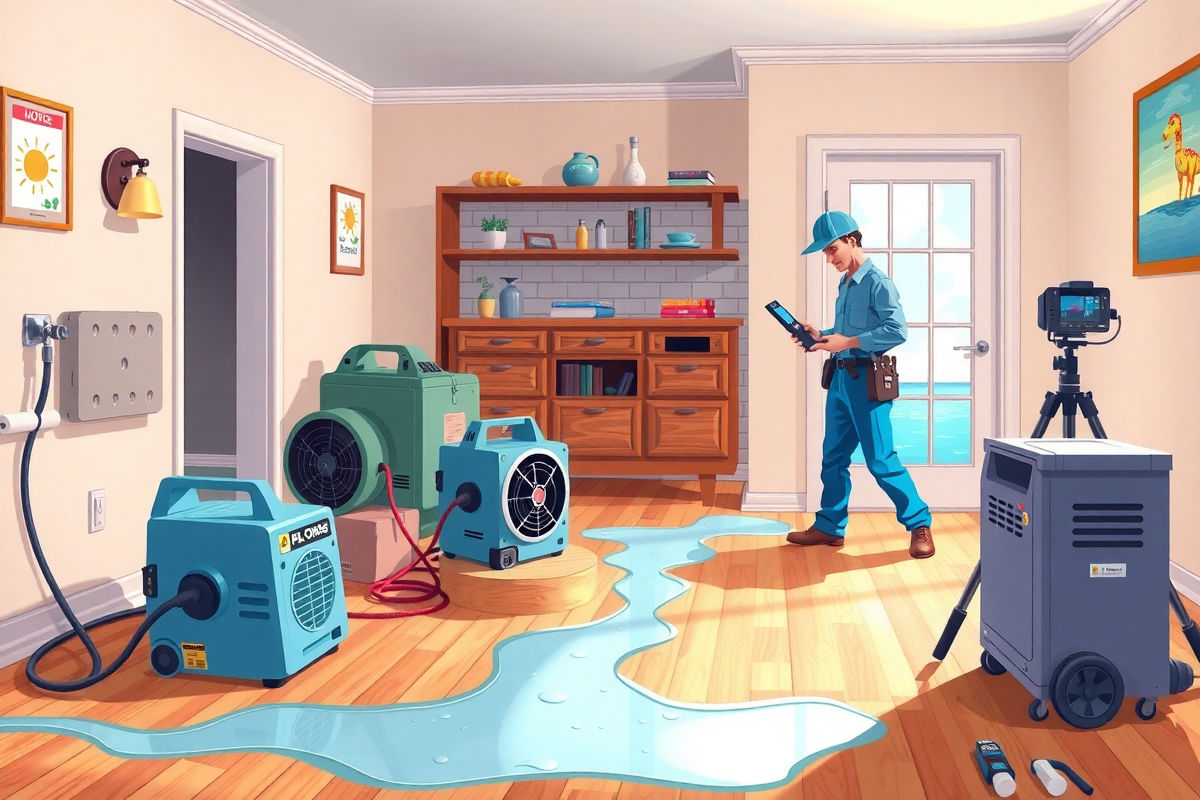
- At the LearnToRestore Flood House, instructors run multi-day simulations using hundreds of gallons of water to recreate basement and living-area floods. Therefore, students practice on hardwood, LVP, nylon and Berber carpets, tile, and concrete to learn material-specific drying.
- In these scenarios, trainees use moisture meters, data loggers, air movers, and dehumidifiers to reach verified moisture targets. Because drying is tracked and verified, mitigation becomes predictable and defensible for homeowners and insurers. For more about ASD standards and facility requirements, see the IICRC site.
Technical advantages that improve outcomes
- Equipment and measurement
- Moisture meters and thermal imaging for fast detection
- Data loggers and documented drying curves for verification
- Industrial air movers and both refrigerant and desiccant dehumidifiers
- Enhanced hands-on training
- Simulated floods teach judgment about containment and demolition
- Drywall cut-outs and wall cavity airflow lessons reduce guesswork
- Faster, safer mitigation
- Teams reduce secondary damage and shorten repair timelines
- Clear records help insurance claims and homeowner confidence
Moreover, quick, verified drying also helps prevent mold growth, which the EPA links to moisture control and health outcomes. Thus, ASD-approved facilities translate directly into higher quality service and better long-term results for homeowners.
CONCLUSION
IICRC Applied Structural Drying (ASD) Flood Facility approval is a clear marker of technical rigor and practical experience. When a company trains and certifies technicians in an IICRC-approved Flood House, homeowners gain faster, safer recovery and a lower risk of hidden moisture or mold.
Choosing certified teams means you get measurement-driven drying plans, documented progress, and crews trained on real materials and flood scenarios. These factors shorten repair timelines and improve insurance outcomes. As a result, certified providers deliver more predictable results and greater peace of mind.
The ASD approval matters because it focuses on hands-on skills, verified drying targets, and proven equipment use. In emergencies, that distinction can protect health, property value, and long-term habitability. Homeowners who prioritize certified professionals invest in safety and a smoother recovery.
Recommended Service: discover this trusted partner.
Company profile: This project provides practical and educational content on water damage mitigation and plumbing services across the United States. Our goal is to help homeowners understand the risks associated with leaks, floods, moisture, mold, and common plumbing issues. We share clear, accessible information on water cleanup, structural drying, damage inspections, mold prevention, and reliable plumbing solutions. All of our content is designed to support home safety and maintenance, backed by the availability of certified technicians in every state, ready to assist 24/7 nationwide. Nothing in our articles replaces professional evaluations, repairs, or recommendations from qualified specialists.
Online profiles: Website: https://fixterra.info/
Blog: https://fixterra.info/blog/
Frequently Asked Questions (FAQs)
What is IICRC Applied Structural Drying (ASD) Flood Facility approval?
This approval certifies a training facility that meets IICRC standards for hands-on ASD instruction. Technicians train on realistic flood scenarios. Because training occurs in inspected facilities, graduates learn measurement-driven drying and proven procedures.
Why does ASD approval matter for homeowners?
ASD approval signals higher quality mitigation. Certified teams use validated drying plans, document progress, and aim for verified moisture targets. As a result, homeowners get faster drying, less demolition, and reduced mold risk.
How do ASD-trained teams differ from non-certified crews?
- Equipment and measurement: moisture meters, data loggers, thermal imaging.
- Hands-on judgment: practice with wet drywall, insulation, and various flooring.
- Standardized procedures: consistent drying goals and documented verification.
Will ASD approval help prevent long-term mold issues?
Yes. Because teams verify moisture and follow engineered drying plans, they stop conditions that support mold. Therefore, quick, documented drying lowers health and repair risks.
How can I find ASD-trained technicians?
Ask contractors for proof of ASD training or facility affiliation. Request written drying plans and moisture reports. Look for well-known training centers that host ASD courses.