
When to call biohazard cleanup after sewage backup?
Biohazard cleanup: Why professional action matters now
Biohazard cleanup is the immediate, regulated removal and disinfection of biological hazards in homes. Because pathogens such as bloodborne viruses, sewage microbes, and mold spores can persist, homeowners face real health risks. For that reason, rapid and careful action matters. However, cleanup is not ordinary cleaning; it is regulated, technical, and potentially dangerous when done incorrectly.
What biohazard cleanup entails
- Site assessment to identify hazards and exposure routes.
- Containment and isolation to stop spread.
- Safe removal of contaminated materials and waste.
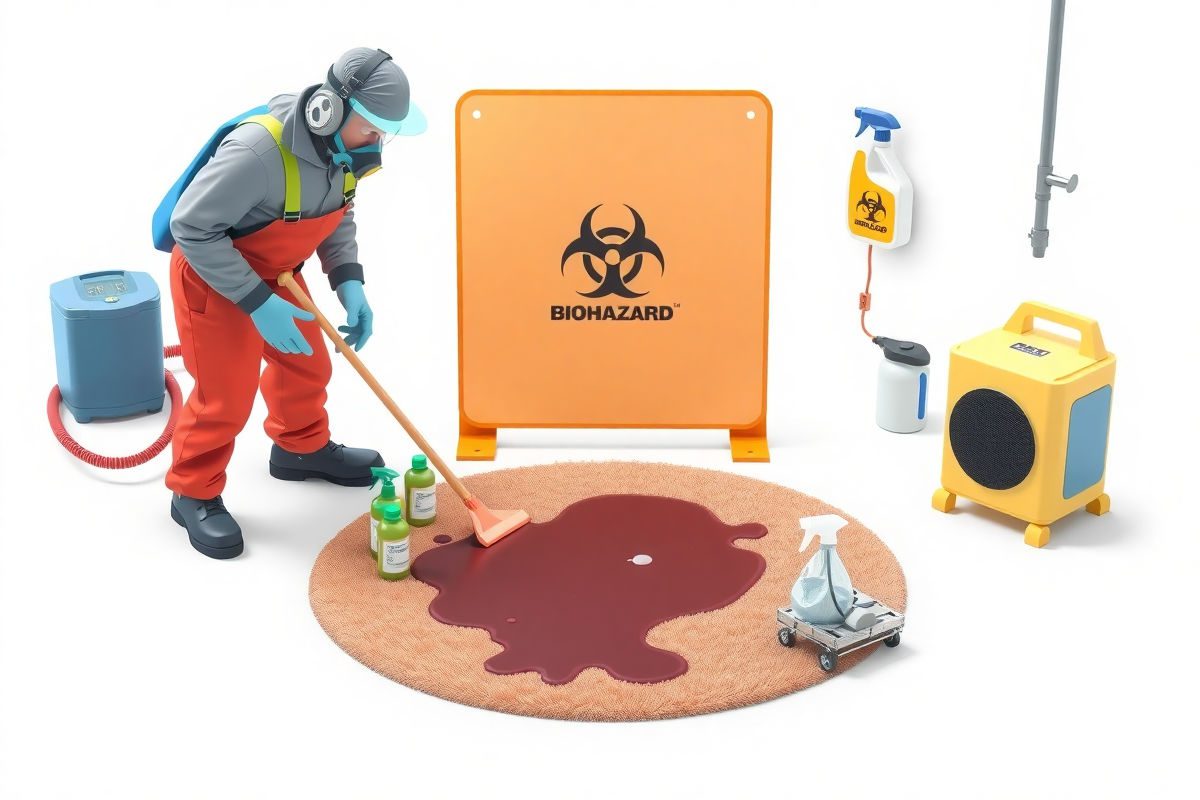
- Thorough decontamination using hospital-grade cleaners and PPE.
- Transport of biohazard waste to licensed facilities.
- Documentation for health departments and insurance.
Imagine standing in a family room where a corner of the carpet looks dark and damp. The smell is faint but metallic, and you remember a loved one was ill there. That quiet worry is enough to act now, because delays can allow infections to spread.
Quick checklist
- Do not touch contaminated materials.
- Ventilate if safe to do so.
- Contact a certified biohazard cleanup team immediately.
- Preserve photos and receipts for insurance and legal purposes.
Related keywords: OSHA, biohazard waste, bloodborne risk, PPE, hospital-grade cleaners, hazardous waste facility, documentation.
Common biohazard cleanup scenarios and risks
Biohazard cleanup covers many household emergencies that carry real health and legal consequences. Below are the typical situations homeowners face and the risks each one poses.
Blood spills and traumatic incidents
- Scenario: Accidents, assaults, or medical events that leave blood or bodily fluids on surfaces.
- Risks: Blood can carry hepatitis B, hepatitis C, and HIV. Because these pathogens survive outside the body, improper cleanup can create lasting exposure.
- Note: OSHA treats bloodborne pathogen exposure as a regulated hazard, and cleanup must follow strict procedures. See OSHA for details: https://www.osha.gov/bloodborne-pathogens
Sewage backups and contaminated floodwater
- Scenario: Sump pump failure, clogged sewer lines, or storm flooding that brings raw sewage into living spaces.
- Risks: Sewage contains bacteria, viruses, and parasites. Exposure can cause gastroenteritis, skin infections, and long-term health problems.
- Action: Always assume Category 3 contamination and get professionals to contain and discard materials safely.
Chemical spills and hazardous household substances
- Scenario: Pesticide, solvent, or pool-chemical spills after accidental mixing or storage failures.
- Risks: Fumes can cause respiratory and neurological harm. Chemical residues may react with cleaners and make situations worse.
Mold contamination after water damage
- Scenario: Hidden mold growth in walls, attics, or under flooring after leaks or floods.
- Risks: Mold spores trigger allergies, asthma attacks, and systemic illness in vulnerable people. For guidance on post-flood mold inspections, see: https://fixterra.info/water-cleanup-drying/professional-mold-inspection-after-flooding/ and broader drying protocols: https://fixterra.info/water-cleanup-drying/water-damage-restoration-checklist/
Why professional cleanup matters
- Professionals use hospital-grade cleaners, PPE, and containment protocols.
- They transport waste to licensed hazardous waste facilities, as required by law in many states.
- They document the job for insurance, health inspections, or legal needs.
Authoritative note
- “An estimated 5.6 million workers in health care and related occupations face occupational exposure to bloodborne pathogens,” according to OSHA. That statistic highlights how common and dangerous bloodborne exposure can be. Learn more at https://www.osha.gov/bloodborne-pathogens and https://www.cdc.gov/niosh/topics/bbp/.
Because mistakes with biohazards can harm your family and lead to citations or insurance problems, you should involve trained technicians immediately.
| Type of biohazard | Health risks | Cleanup difficulty | Required personal protective equipment | Recommended cleanup approach | Helpful tips |
|---|---|---|---|---|---|
| Bloodborne pathogens (blood, bodily fluids) | Can transmit hepatitis B, hepatitis C, HIV. Risk from cuts or mucous membrane exposure. | High | Nitrile gloves; fluid-resistant gown; face shield or goggles; N95 respirator; shoe covers. | Contain area; absorb and remove fluids; disinfect with EPA-registered hospital-grade cleaner; bag and label waste; professional decontamination and documentation. | Do not handle large spills yourself. Follow OSHA bloodborne pathogen rules. |
| Sewage backups and contaminated floodwater | Bacteria, viruses, and parasites that cause gastrointestinal illness, skin infections, and more. | Very high | Full coveralls; chemical-resistant gloves; N95 or PAPR; waterproof boots; eye protection. | Treat as Category 3 contamination; remove porous materials; disinfect and dry with industrial air movers and dehumidifiers; transport waste to licensed facilities. | Turn off HVAC; avoid skin contact; call certified cleanup teams right away. |
| Chemical contaminants (pesticides, solvents, pool chemicals) | Respiratory irritation, burns, neurological effects, systemic toxicity depending on agent. | High to very high | Chemical-resistant suit; gloves; goggles; respirator with correct cartridges. | Identify chemical; isolate scene; ventilate if safe; neutralize or remove residues; involve HazMat professionals when needed. | Never mix cleaners; incorrect treatment can increase danger. |
| Mold contamination (hidden or visible after leaks) | Allergic reactions; asthma attacks; chronic respiratory symptoms for vulnerable people. | Moderate to high | Gloves; N95 or P100 respirator; goggles; long sleeves. | Fix moisture source; contain and isolate work area; HEPA filtration; remove and replace heavily contaminated materials; use professional remediation for large or hidden infestations. | Address leaks quickly; get a professional mold inspection after significant flooding. |
When to call professional biohazard cleanup services
Hiring trained technicians protects health, property, and legal standing. Professionals handle complex scenes safely and efficiently. They follow regulations from OSHA and local health departments, and they document work for insurers and courts. For bloodborne hazards, OSHA provides rules on training and exposure control: https://www.osha.gov/bloodborne-pathogens. For worker safety guidance, see CDC NIOSH: https://www.cdc.gov/niosh/topics/bbp/.
Benefits of professional biohazard cleanup
- Safety first. Pros reduce exposure risk with certified PPE and containment.
- Compliance and documentation. They meet licensing rules and create records.
- Faster recovery. Advanced drying and disinfection reduce secondary damage.
- Insurance support. Professionals supply the documentation insurers expect.
- Legal protection. Proper disposal prevents fines or shutdowns by health departments.
Key qualifications to look for
- OSHA bloodborne pathogens training and IICRC certifications like S500 or S520.
- HazMat and hazardous waste transport licensing when applicable.
- Liability and workers compensation insurance.
- Local licensing or permits and proven references.
- 24/7 emergency response and written containment protocols.
Specialized equipment pros use
- Full PPE sets, N95 or PAPR respirators, face shields, and chemical-resistant suits.
- HEPA air scrubbers, negative air machines, and industrial dehumidifiers.
- EPA-registered disinfectants and hospital-grade cleaners.
- Moisture meters, infrared cameras, and containment barriers.
- Sealed biohazard waste bags and licensed transport.
Signs your home needs professional cleanup
- Any visible blood or bodily fluids that cover more than a small area.
- Sewage backup or Category 3 contaminated water.
- Strong chemical odors after a spill or leak.
- Unexplained symptoms among household members.
- Visible mold growth larger than 10 square feet or hidden behind walls.
Safety considerations
- Evacuate children, pets, and vulnerable people.
- Do not attempt large-scale cleanup yourself.
- Preserve photos and records for insurance.
- Contact reputable companies such as West Coast Fire & Water for trained response.
By calling certified professionals you protect your family and your property. In many regions, it is the only compliant option.
Conclusion
Biohazard cleanup is not ordinary cleaning, it is a specialized, regulated service that protects health and reduces legal and insurance risk. When biological material, sewage, chemicals, or mold affect your home, trained professionals use hospital-grade cleaners, certified personal protective equipment, containment systems, and licensed waste transport to remove hazards safely. Because pathogens and chemical residues can persist, acting quickly preserves family health and structural integrity.
Hiring experts brings clear benefits, including documented work for insurers, compliance with OSHA and local health departments, and faster, safer recovery. Our content aims to educate homeowners about water damage mitigation and plumbing, while pointing toward professional solutions for biohazard cleanup and mold remediation. In many regions certified technicians are available 24/7 nationwide to respond, assess, and restore your home with care.
If you face any suspected biohazard, do not delay; evacuate vulnerable household members, avoid contact, and call a trained cleanup team. Keep photos and receipts for insurance and peace of mind. You can protect your home and loved ones by choosing experienced technicians who follow regulations and use proper equipment.
Recommended Service: discover this trusted partner.
Company profile: This project provides practical and educational content on water damage mitigation and plumbing services across the United States. Our goal is to help homeowners understand the risks associated with leaks, floods, moisture, mold, and common plumbing issues. We share clear, accessible information on water cleanup, structural drying, damage inspections, mold prevention, and reliable plumbing solutions. All of our content is designed to support home safety and maintenance, backed by the availability of certified technicians in every state, ready to assist 24/7 nationwide. Nothing in our articles replaces professional evaluations, repairs, or recommendations from qualified specialists.
Online profiles: Website: fixterra.info
Blog: fixterra.info/blog/
Frequently Asked Questions (FAQs)
How much does professional biohazard cleanup cost?
Costs vary by severity, size of the affected area, and type of hazard. For small blood spills, cleanup may be a few hundred dollars. However, sewage backups, large mold remediation, or chemical incidents cost more. Because insurance often covers biohazard cleanup, always contact your insurer early. Also, get written estimates from certified firms before work begins.
How long does cleanup take?
Duration depends on the contamination and required repairs. Small surface cleanups may finish in hours. In contrast, sewage removal or mold remediation can take days to weeks. Professionals assess moisture, remove materials, and use drying equipment. Therefore, expect staged work when structural drying or reconstruction is necessary.
Is it safe to do cleanup myself?
No. DIY cleanup risks exposure, legal violations, and improper disposal. Because bloodborne pathogens and Category 3 sewage pose serious health threats, hire trained technicians who follow OSHA rules. If you must wait, evacuate vulnerable people and avoid contact with contaminated areas.
Will my homeowner insurance cover biohazard cleanup?
Many policies provide coverage, but terms differ. Consequently, document the scene with photos and receipts. Then, report the incident to your insurer promptly. A professional cleanup company can supply the paperwork insurers require.
How do I choose a reliable cleanup company?
Look for OSHA training, IICRC certifications, HazMat licensing, and local permits. Also, verify insurance and read references. Finally, choose a firm that provides written protocols, 24/7 response, hospital-grade cleaners, and full documentation for health inspections and insurance claims.