When Is Professional biohazard cleanup Needed in Bay Area?
Introduction
Professional biohazard cleanup responds after incidents that leave blood, bodily fluids, sewage, or other biological contaminants on your property. Because pathogens hide in carpets, wall cavities, and under floorboards, DIY cleaning often misses dangerous residue. However, trained technicians use containment, personal protective equipment, and hospital grade cleaners to remove hazards and restore safety.
Why professional help matters
- Safety first: professionals protect occupants and workers from infection or exposure.
- Regulatory compliance: they follow OSHA and California rules, ensuring proper hazardous waste disposal.
- Hidden damage detection: experts find contamination in walls, under flooring, and inside HVAC systems.
- Documentation and insurance: you receive proof of cleanup for claims, health inspections, or property transactions.
Therefore, quick expert intervention prevents lingering odors, mold growth, and legal headaches. In the San Francisco Bay Area, calling a licensed team can be not only safer but required by law. As you read on, we will outline what to expect, common biohazard scenarios, and how certified teams like West Coast Fire & Water handle containment, cleanup, and disposal.
The Process of Professional Biohazard Cleanup
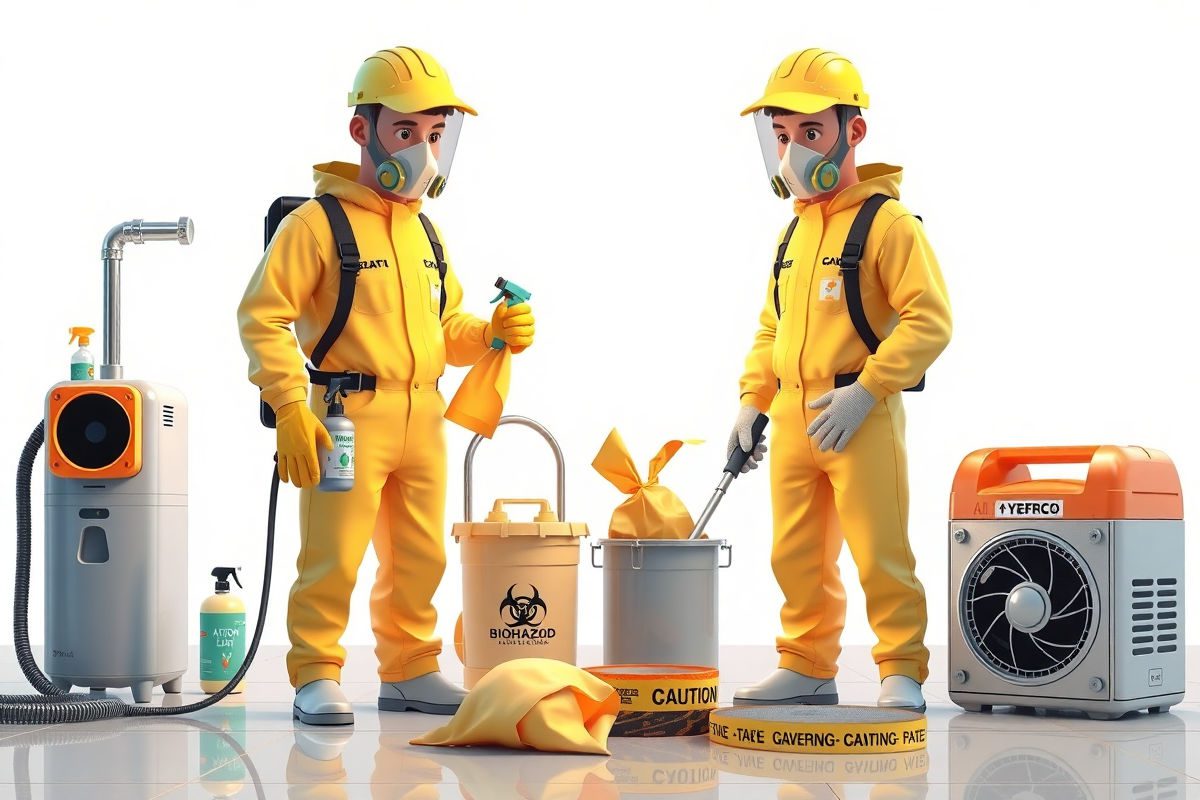
Professional biohazard cleanup follows a strict, repeatable workflow. Teams assess the scene, contain hazards, remove contaminated materials, disinfect surfaces, and document the work for regulatory and insurance purposes. Because pathogens hide in porous materials and HVAC systems, technicians use specialized tools and hospital-grade cleaners to reach every surface.
Step-by-step overview
- Initial assessment and triage
- Inspect the site and identify visible and hidden contamination.
- Secure the area to prevent entry and cross contamination.
- Containment and safety setup
- Establish negative air pressure and containment barriers when needed.
- Wear appropriate PPE including respirators, gloves, and suits.
- Removal of contaminated materials
- Remove non salvageable items following hazardous waste rules.
- Bag and label biohazard waste for transport to licensed facilities. Under California law, biohazard waste must go to a licensed hazardous waste facility.
- Cleaning and disinfection
- Use hospital-grade cleaners and EPA registered disinfectants to treat hard and soft surfaces.
- Clean HVAC components, test air quality, and use HEPA filtration if required.
- Drying, odor control and restoration coordination
- Dry structural materials to prevent mold growth and secondary damage. For drying and restoration steps, see the water damage restoration checklist at this link.
- Documentation and final verification
- Provide written reports, photos, and chain-of-custody for waste disposal. Documentation helps with insurance claims and health inspections.
Why the method matters
- OSHA has very strict rules about handling blood and bodily fluids, so trained teams reduce legal and health risks. For official guidance on bloodborne pathogens and workplace controls, refer to OSHA: this link.
- For public health guidance on infectious agents and cleaning recommendations, consult the CDC: this link.
“Pathogens don’t care how good your bleach smells. Our team uses hospital-grade cleaners, proper PPE, and advanced containment methods to make sure every inch is actually clean, not just looks clean.” This quote underscores the difference between visible cleaning and verified decontamination.
Benefits of Hiring Professional Biohazard Cleanup Services
Hiring expert technicians delivers measurable health, legal, and financial benefits. Professionals reduce exposure risk, ensure compliance, and restore properties faster and safer than DIY attempts.
Key benefits
- Health and safety
- Minimize infection risk for occupants and responders through trained procedures and PPE.
- Regulatory compliance and documentation
- Avoid citations or shutdowns by meeting OSHA, local health, and California hazardous waste laws.
- Proper disposal
- Prevent illegal disposal of contaminated items. You cannot toss bloody rags or contaminated carpeting into regular trash.
- Faster recovery and reduced secondary damage
- Controlled drying and targeted disinfection prevent mold growth and structural deterioration. If you suspect mold after flooding, professional inspection is recommended: this link.
- Insurance and resale value
- Professional reports smooth claims and protect property value during sale or rental.
In short, pros protect health, follow the law, and document every step. Therefore, when a biohazard event happens, calling a certified local team such as West Coast Fire & Water is the safest move.
| Type of Biohazard | Standard Procedures | Safety Measures | Typical Response Time |
|---|---|---|---|
| Blood and bodily fluids | Assess and secure area; remove contaminated porous items; clean and disinfect hard surfaces with hospital-grade cleaners; document work | Full PPE, N95/P100 respirators when needed, biohazard bags, sharps containers | 1 to 4 hours for initial containment; full remediation 24 to 72 hours |
| Sewage backup | Stop source, pump out standing sewage, remove contaminated materials, sanitize with EPA registered disinfectants, dry and deodorize | Waterproof PPE, respirators, hand hygiene stations, HEPA filtration when aerosol risk exists | Emergency response within 1 to 4 hours; complete cleanup 24 to 72 hours |
| Trauma and crime scenes | Coordinate with authorities, contain scene, remove contaminated materials, deep disinfection, odor removal, documentation for chain-of-custody | Police scene protocols, full biohazard suits, strict access control, licensed waste disposal | On call 24/7; initial response within hours depending on police clearance |
| Medical and clinical waste | Segregate infectious materials, neutralize fluids, package for regulated transport, deliver to licensed hazardous waste facility | Needle-safe containers, double-bagging, labeled transport, staff training in bloodborne pathogens | Scheduled pickup or rapid response depending on risk; typically 24 to 48 hours |
| Mold after contaminated water | Inspect for hidden contamination, remove wet porous materials, apply antimicrobials, structural drying and air purification | Respirators, gloves, containment to prevent cross contamination, HEPA vacuums | Inspection within 24 hours; remediation 2 days to one week depending on extent |
Note: Exact procedures and timing vary by situation and local rules. For Bay Area properties, local health departments and California law may affect disposal and timing. Always choose licensed professionals for safe, compliant, and documented Professional biohazard cleanup.
Health Risks of Improper Handling and Why Professional Biohazard Cleanup Matters
When blood, sewage, or bodily fluids stain a floor, the danger is not only what you see. Invisible microbes lurk in carpet fibers, wall cavities, and HVAC ductwork. Because pathogens travel by touch, aerosol, or tiny droplets, a single careless swipe can spread infection through a home or business. The smell of stale sewage or chemical cleaners only hints at deeper risks. In short, improper handling turns a contained hazard into a wider health threat.
Immediate and long term health risks
- Acute infections: exposure to bloodborne pathogens can transmit hepatitis B, hepatitis C, and other diseases. As a result, first responders and untrained cleaners face direct exposure risks.
- Respiratory problems: sewage and mold release spores and volatile compounds that irritate lungs and trigger asthma attacks. Therefore, vulnerable people and children suffer most.
- Skin and eye irritation: contaminated fluids cause rashes, burns, and eye infections when not handled with proper PPE.
- Secondary hazards: hidden moisture leads to mold growth and structural decay, which then increases long term health risks and remediation costs.
Prevention tips and best practices
- Restrict access immediately and do not touch contaminated items. Don’t let anyone near the affected space until pros arrive.
- Call a certified team for Professional biohazard cleanup. Trained technicians follow OSHA standards and California hazardous waste rules to protect health and comply with the law.
- Avoid DIY decontamination. Bleach and household cleaners can reduce some microbes but often miss deep contamination and create false security.
- Get professional documentation. Photographs and cleanup reports help with insurance claims, inspections, and legal protection.
- Address water and mold fast. Rapid drying and professional mold inspection reduce the chance of lingering spores; see professional mold inspection guidance: professional mold inspection guidance.
“From OSHA to local Bay Area ordinances, we know exactly what’s required. That means no surprises down the line if you’re dealing with insurance or trying to sell or rent the property.” This fact highlights why expert intervention matters. Ultimately, calling licensed professionals protects health, preserves property value, and prevents costly secondary damage.
Conclusion
Professional biohazard cleanup is not optional when health and safety are at stake. After blood, sewage, or contaminated water affects a property, expert removal and verified disinfection stop infections, prevent mold, and avoid regulatory penalties. For homeowners and businesses, quick certified response reduces long term health risks and costly secondary damage.
West Coast Fire & Water brings deep experience, hospital-grade cleaners, and strict containment protocols to every job. Because our teams follow OSHA and local regulations, we protect occupants and preserve evidence for insurance or legal needs. Moreover, certified technicians are available 24/7 nationwide to respond fast, document the work, and restore safe living conditions.
If you face a biohazard event, do not wait. Call a licensed specialist for safe, compliant, and documented cleanup. Your health, your family, and your property depend on it.
Recommended Service: discover this trusted partner.
Company profile: This project provides practical and educational content on water damage mitigation and plumbing services across the United States. Our goal is to help homeowners understand the risks associated with leaks, floods, moisture, mold, and common plumbing issues. We share clear, accessible information on water cleanup, structural drying, damage inspections, mold prevention, and reliable plumbing solutions. All of our content is designed to support home safety and maintenance, backed by the availability of certified technicians in every state, ready to assist 24/7 nationwide. Nothing in our articles replaces professional evaluations, repairs, or recommendations from qualified specialists.
Frequently Asked Questions about Professional biohazard cleanup
When should I call a professional?
Call a professional immediately after any incident involving blood, bodily fluids, sewage, or unknown contamination. If there is visible soiling, strong odors, or water intrusion, do not wait. Rapid action prevents mold and infection. If authorities are involved, preserve the scene and wait for clearance before cleanup.
Is it safe to stay in the property during cleanup?
Safety depends on the situation and the contaminant type. However, you should generally vacate the area until technicians secure it. Professionals set containment zones and clear the air with HEPA filtration, so you can return once they confirm the site is safe.
How much does professional cleanup cost and does insurance cover it?
Costs vary by scope, contamination type, and disposal needs. Therefore, expect a range rather than a fixed price. Many homeowner and business insurance policies cover biohazard cleanup. Ask your provider and get a professional estimate for claims.
What safety measures do technicians use?
Trained teams use hospital grade cleaners, PPE, negative air machines, HEPA vacuums, and licensed waste packaging. They follow OSHA rules and California hazardous waste requirements to reduce exposure and legal risk.
What documentation will I receive?
You will get a written report, photos, and chain of custody for disposed waste. Documentation helps with insurance claims, inspections, and resale disclosures.