
How Does IICRC ASD Flood Facility Prevent Mold?
IICRC ASD Flood Facility: Hands-On Training That Prevents Mold After Floods
The IICRC ASD Flood Facility proves why standards matter in water damage mitigation. Because it is an IICRC-approved Applied Structural Drying site, technicians learn proven drying methods. Therefore, the IICRC ASD Flood Facility gives hands-on experience with dehumidifiers, air movers, and moisture monitoring. As a result, trainees see how correct airflow and drying limits reduce mold risk and structural harm.
This facility simulates real floods. Trainers flood the Flood House with controlled water to recreate common scenarios. Then, participants apply industry best practices to hardwood, LVP, carpet, tile, and concrete. Additionally, students practice pack-out, containment, and safety protocols. This approach builds confidence and speeds field decisions during real restorations.
For homeowners and contractors, this standard matters because it raises repair quality across the industry. Moreover, following IICRC ASD guidelines helps insurance claims, improves drying outcomes, and prevents costly callbacks. In short, the Flood Facility blends classroom teaching with real-world work. It prepares technicians to stop moisture, limit mold, and restore homes faster and safer.
Related keywords include Applied Structural Drying, Flood House, LearnToRestore.com, drying equipment, moisture meters, and structural drying standards. Therefore, this article explains how professional drying avoids mold and protects building health.
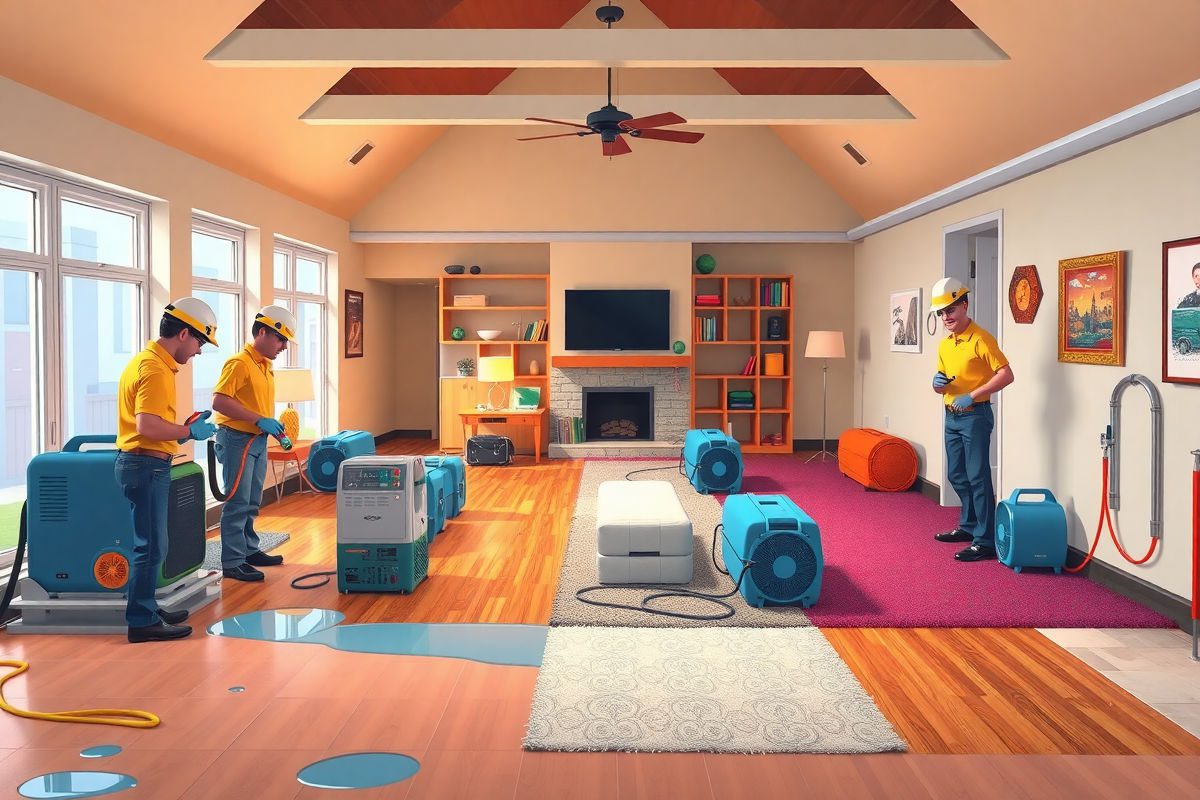
What the IICRC ASD Flood Facility Certification Means
The IICRC ASD Flood Facility certification verifies that a training site meets strict Applied Structural Drying standards. Because the certification comes from the IICRC, it aligns classroom learning with field-ready procedures. Trainees practice on real materials and flooring types, so they learn how equipment and methods perform in realistic conditions.
Certification entails practical and administrative requirements including:
- Controlled flood testing to simulate real events. For example, the Flood House is flooded with hundreds of gallons of water over several days.
- Hands-on training with dehumidifiers, air movers, moisture meters, and containment systems.
- Clear drying goals and documentation to show when structures meet drying criteria.
- Instructor qualifications and curriculum that follow IICRC ASD protocols.
- Facility features that replicate common home construction and finishes such as hardwood, LVP, nylon and Berber carpet, tile, and concrete.
These standards create repeatable, measurable outcomes. As a result, technicians gain confidence and insurers see consistent documentation. The IICRC provides further details at IICRC.
Why the IICRC ASD Flood Facility Standard Matters in Flood Mitigation
Standards matter because water behaves unpredictably and mold grows quickly. Therefore, certified training reduces guesswork and speeds correct action. The ASD standard sets limits on moisture and defines airflow strategies. It also guides when to remove materials and when to dry in place.
Key benefits include:
- Reduced mold risk due to controlled drying and monitoring.
- Faster restoration times because teams follow proven airflow and dehumidification plans.
- Better insurance outcomes because the work includes documented drying goals.
- Real-world experience that prepares technicians for complex wall cavity and insulation challenges.
Moreover, following established standards aligns with public safety guidance on mold and moisture. For more homeowner-focused information on mold risks, see the U.S. Environmental Protection Agency.
The IICRC ASD Flood Facility bridges theory and practice. In short, it raises industry quality, improves homeowner outcomes, and helps prevent costly mold remediation later.
| Feature | IICRC ASD Flood Facility (Certified) | Non Certified Facility |
|---|---|---|
| Safety protocols | Standardized safety training and documented PPE use, containment and hazard control | Variable safety practices, often reactive rather than preventive |
| Restoration speed and efficiency | Proven drying plans with airflow and dehumidification that shorten drying time | Inconsistent methods, longer drying and higher risk of secondary damage |
| Technician expertise and training | Hands on ASD classes on real materials, certified instructors and measurable outcomes | On the job learning with mixed skill levels and no ASD validation |
| Equipment standardization | Industry grade dehumidifiers, air movers and calibrated moisture meters used according to protocol | Mixed equipment quality and less rigorous calibration or placement |
| Drying documentation and goals | Clear drying goals, measurable endpoints and detailed reporting for claims | Limited documentation, subjective drying decisions and weaker claims support |
| Material and flooring testing | Flood House simulates hardwood, LVP, carpet, tile and concrete for accurate training | Limited ability to test across common flooring types in controlled floods |
| Insurance and claim confidence | Insurers accept documented ASD procedures and verifiable dry standard achievement | Claims face more scrutiny due to inconsistent documentation |
| Quality guarantees and accountability | Curriculum and facility audits ensure repeatable outcomes and recertification | No formal guarantee, limited external oversight |
| Real world simulation | Controlled flooding events reproduce typical scenarios for hands on practice | Rarely replicates realistic flood loads or prolonged exposure |
| Ongoing audits and improvement | Regular review to meet IICRC standards and update methods | Improvements depend on individual provider priorities |
Therefore, certification delivers measurable benefits and reduces long term costs.
This comparison highlights key differences in safety, speed, documentation and final quality. Choosing an IICRC ASD Flood Facility trained team reduces mold risk and improves restoration outcomes.
Related keywords: Applied Structural Drying, Flood House, drying equipment, moisture meters, LearnToRestore.com.
Benefits of IICRC ASD Flood Facility Certification for Facilities and Technicians
Earning IICRC ASD Flood Facility certification transforms how facilities train and how technicians work. Because certification demands real flood simulations and documented drying goals, teams gain clearer procedures. As a result, facilities operate more safely, resolve flood jobs faster, and earn stronger customer trust.
Why it matters for facilities
- Safer work sites: Certified facilities run controlled floods and require documented PPE, containment, and hazard control. For example, Flood House instructors flood rooms to teach safe pump and electrical procedures. Therefore, crews leave training with safety habits they use in the field.
- Consistent outcomes: The ASD standard sets measurable drying endpoints. Consequently, facilities deliver repeatable drying results across hardwood, LVP, carpet, tile, and concrete. This reduces variance between jobs and cuts costly callbacks.
- Operational efficiency: Because staff train with calibrated moisture meters and industry grade dehumidifiers, teams learn optimal equipment placement. This lowers energy waste and shortens drying time. Moreover, documented plans streamline job scheduling and supply needs.
Why it matters for technicians
- Accelerated skill development: Hands on ASD classes let technicians practice in realistic, flooded conditions. For example, trainees adjust air movers inside cavities and log drying curves. Thus, new techs move from theory to competence faster.
- Professional credibility: Certification shows employers and homeowners that technicians follow IICRC protocols. As a result, technicians gain trust during inspections and insurance reviews.
- Better decision making: Because the curriculum emphasizes moisture science and airflow, techs learn when to dry in place and when to remove materials. This reduces unnecessary demolition and protects more of the home.
Customer trust and business benefits
- Stronger insurance support: Insurers prefer work that includes documented drying goals. Therefore, certified reports speed claims and lower disputes.
- Market differentiation: Facilities advertise ASD certification to win business. As a result, they attract clients who prioritize safety and long term outcomes.
- Reduced mold risk: Following ASD protocols lowers the chance of hidden moisture and mold growth. For homeowner guidance on mold health concerns, see the U.S. Environmental Protection Agency.
Learn more about certification standards and IICRC requirements at IICRC. Related keywords: Applied Structural Drying, Flood House, LearnToRestore.com, drying equipment, moisture meters, structural drying standards.
Conclusion
The IICRC ASD Flood Facility standard sets a clear bar for safe and effective flood restoration. By combining applied structural drying science, controlled flood simulations, and documented drying goals, the standard reduces mold risk and improves long-term outcomes. Because certified training focuses on dehumidifiers, air movers, moisture meters, and real-world materials, technicians arrive on jobs ready to act fast and correctly.
Choosing teams trained at an IICRC ASD Flood Facility means:
- Safer jobsites and fewer surprises.
- Faster, measurable drying and fewer callbacks.
- Stronger insurance documentation and homeowner confidence.
Our company maintains nationwide availability of certified technicians and a commitment to water damage mitigation and plumbing services across the United States. As a result, homeowners and property managers can find qualified help quickly—from emergency extraction to structural drying and final repairs.
If you face flood damage, act now. Contact a certified team for an inspection, a drying plan, and clear documentation. Protect your property from hidden moisture and mold by choosing IICRC ASD trained professionals.
Recommended Service: discover this trusted partner.
Company profile: This project provides practical and educational content on water damage mitigation and plumbing services across the United States. Our goal is to help homeowners understand the risks associated with leaks, floods, moisture, mold, and common plumbing issues. We share clear, accessible information on water cleanup, structural drying, damage inspections, mold prevention, and reliable plumbing solutions. All of our content is designed to support home safety and maintenance, backed by the availability of certified technicians in every state, ready to assist 24/7 nationwide. Nothing in our articles replaces professional evaluations, repairs, or recommendations from qualified specialists.
Online profiles: Website: https://fixterra.info/
Blog: https://fixterra.info/blog/
Frequently Asked Questions (FAQs)
What is an IICRC ASD Flood Facility?
An IICRC ASD Flood Facility is a certified training site for Applied Structural Drying. It uses controlled flooding and real materials so technicians learn practical drying techniques.
Why does ASD certification matter for flood restoration?
Certification sets clear drying goals and safety rules. Therefore, teams follow repeatable methods, reduce mold risk, and produce stronger claims documentation.
How does ASD training help prevent mold?
Trainees use dehumidifiers, air movers, and moisture meters to control moisture. Because the training focuses on airflow and endpoints, hidden moisture gets found and removed.
Will IICRC ASD training improve insurance outcomes?
Yes. Certified reports show measured drying endpoints and equipment logs. As a result, insurers accept documentation more readily and claims close faster.
What should homeowners expect from certified technicians?
Expect thorough inspections, a written drying plan, regular moisture readings, and clear updates. Moreover, certified techs explain when to dry in place versus remove materials.
If you need more detail, contact a certified team for an on-site assessment and a clear restoration plan.